
Café Packaging Par Levels: A Reorder Point Worksheet
On this page 7 sections
A café packaging par level is the most stock you want on the shelf for each item: your average daily usage multiplied by the days between placing an order and receiving it plus the days until your next count, plus a safety buffer. For simple café packaging stock management, set a reorder point under it, count once a week, and order whole cartons whenever an item falls to or below that trigger.
Key takeaways
- Work out par levels item by item from your own figures: cups, stirrers, napkins, carry trays, and cake and catering boxes.
- Reorder point = daily usage × lead time + safety stock. Par level = daily usage × (lead time + days between counts) + safety stock.
- Measure lead time yourself, from the day you place an order to the day the cartons are on your shelf.
- Count in cartons and loose units on the same day each week, then round every order up to whole cartons.
- Recalculate when your menu, trading hours or busy season changes.
What is a par level for café packaging?
A par level is the top-up target for one item. After each order arrives, you want stock back at or near par, so a slow delivery or a busy weekend can't empty the shelf.
The reorder point triggers an order, and the safety stock covers days busier than average. Set all three separately for each item, because stirrers, cups and cake boxes move at very different rates.


How do I calculate a par level and reorder point?
Use four inputs from your own records, then two formulas. Keep everything in single units (cups, napkins, boxes) until the final step, when you convert to cartons.
- U – average daily usage: units used per trading day, taken from your weekly counts or your POS item sales.
- L – lead time: trading days from placing an order to having the stock on your shelf. Use your own order history, not a guess. As a guide, delivery takes 3–5 business days to capital cities and 4–6 business days to regional areas.
- R – review period: trading days between stock counts. For most cafés this is one week.
- S – safety stock: extra units to cover a busier-than-average stretch. A simple starting point is the usage of your busiest single day.
Reorder point = (U × L) + S
Par level = U × (L + R) + S
Order quantity = par level − units on hand, rounded up to whole cartons
Round up because packaging is sold by the carton, and each product page shows the carton price and the price per item.
What does a blank par level worksheet look like?
Copy this worksheet into a spreadsheet or print it and keep it on the storeroom door. Fill in one line per item you stock.
```
Item: ______________________ Units per carton: ______
U average daily usage: ______ units
L lead time (trading days): ______
R days between counts: ______
S safety stock: ______ units
Reorder point (U × L) + S: ______ units
Par level U × (L + R) + S: ______ units
This week's count (cartons × units + loose): ______
Below reorder point? Y / N
Order: (par − on hand) ÷ units per carton, rounded up = ______ cartons
```
Run one worksheet for each line you stock: every cup size, each type of stirrer, dinner and lunch napkins, carry trays, cake boxes and each catering box size. Cups and the matching lids need separate lines, because running out of lids stops service just as fast as running out of cups. For lid sizing, see our guide to takeaway coffee cup lids.
How should I run the weekly stock count?
Count on the same day each week, ideally before service. Record full cartons and loose units separately.
1. Count full cartons in the storeroom, then loose stock behind the counter.
2. Convert to units: full cartons × units per carton, plus loose units.
3. Compare each item with its reorder point. Anything at or below it goes on this week's order.
4. Work out the order quantity to bring each item back to par, in whole cartons.
5. Every few weeks, check whether U has changed and update the worksheet.
Slow items such as cake boxes may only need ordering every few counts; the reorder point tells you when.
What do the usual café items cost per carton?
The table below lists carton quantities and prices for common café items. Use the carton quantity on your worksheet to convert units to cartons.
| Product | Size / material | Carton qty |
|---|---|---|
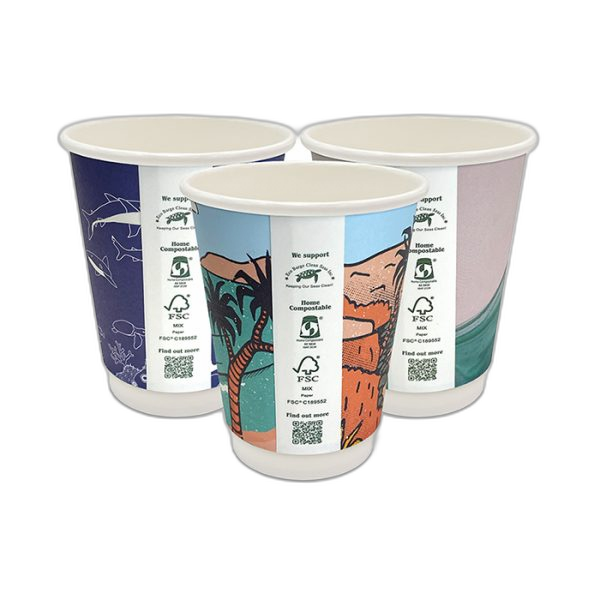
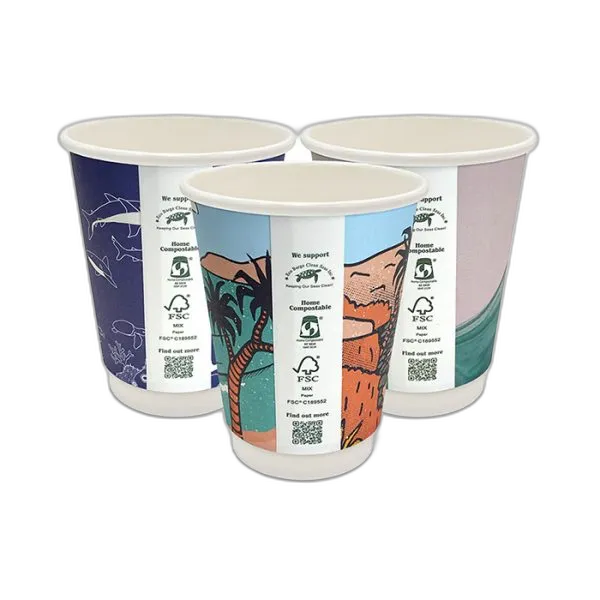
| 8oz Aqueous Coated Coffee Cups – Double Wall Art Print (Carton of 500) | 8oz, Paper + Aqueous Coated | 500 |
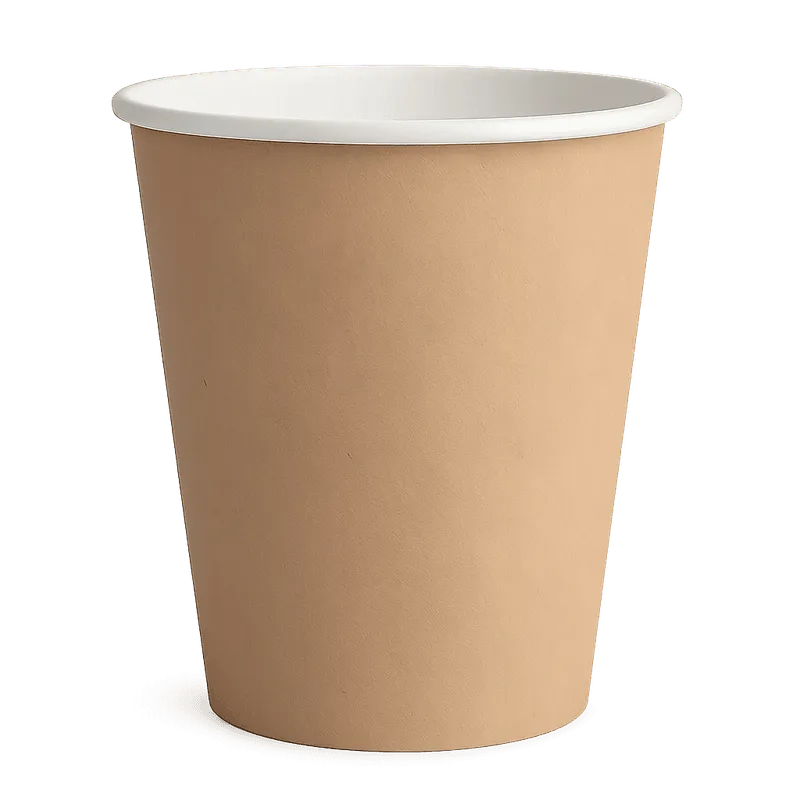
| 12oz Kraft Coffee Cups – Lined SW Print 90mm (Carton of 1000) | 12oz, Paper + PLA Coated | 1000 |
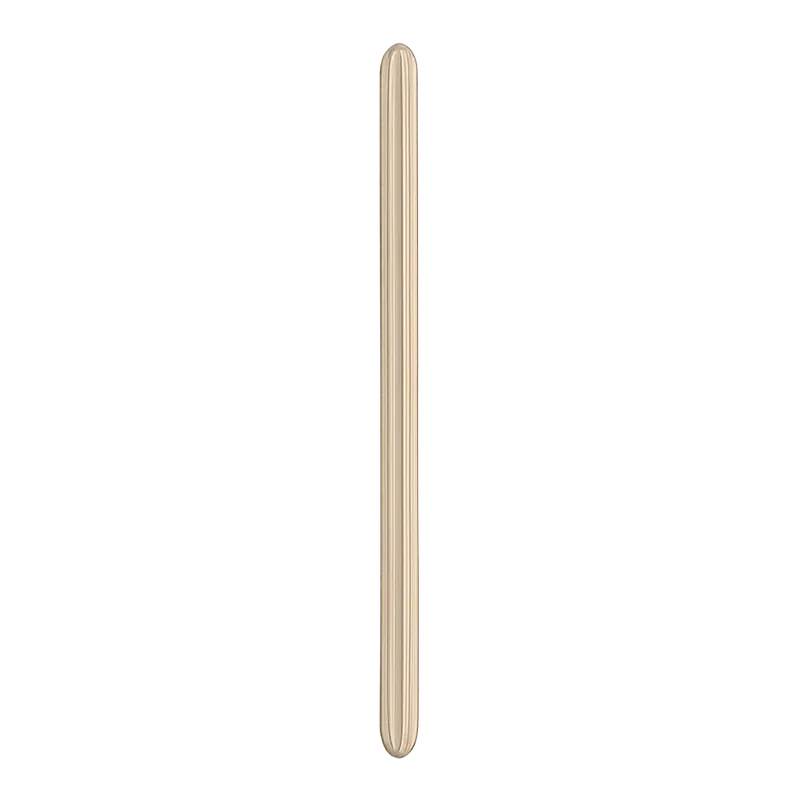
| 140mm Wooden Cutlery – Coffee Stirrer (Carton of 10000) | 140x6x1.3mm, Wood | 10000 |
| Wooden Cutlery – Coffee Stirrer Individually Wrapped (Carton of 5000) | 140x15x2mm, Wood | 5000 |
| Napkins – White Quilted Lunch GT Fold (Carton of 2000) | 300x300mm, Paper | 2000 |
| Coffee Cups – 4 Egg Board Carry Tray (Carton of 300) | 225x225x50mm, Recycled Paper | 300 |
| Takeaway Container – Window Cake Box 8" (Carton of 100) | 203.2x203.2x101.6mm, Corrugated + PET | 100 |
| Plate – Corrugated Catering Box Small (Carton of 100) | 240x169x85mm, Corrugated | 100 |
Which one should I buy?
Match items to how your café serves, then give each its own worksheet line.
- Small takeaway coffees: the 8oz Aqueous Coated Coffee Cups – Double Wall Art Print (Carton of 500) are double wall cups in aqueous-coated paper, 500 to a carton.
- Larger takeaway coffees: the 12oz Kraft Coffee Cups – Lined SW Print 90mm (Carton of 1000) are single wall, PLA-lined paper cups in brown.
- Stirrers at a self-serve station: the 140mm Wooden Cutlery – Coffee Stirrer (Carton of 10000) is a wooden stirrer. If stirrers go out with takeaway orders, the Wooden Cutlery – Coffee Stirrer Individually Wrapped (Carton of 5000) keeps each one wrapped.
- Counter napkins: the Napkins – White Quilted Lunch GT Fold (Carton of 2000) are 300x300mm white paper napkins.
- Multi-coffee orders: the Coffee Cups – 4 Egg Board Carry Tray (Carton of 300) holds four cups and is made from recycled paper.
- Whole cakes: the Takeaway Container – Window Cake Box 8" (Carton of 100) is corrugated with PET.
- Office and catering orders: the Plate – Corrugated Catering Box Small (Carton of 100) is a 240x169x85mm corrugated box.
For the full cup range, browse coffee cups. If you're comparing cup cartons across sizes, read our coffee cups wholesale guide.
How does ordering work?
Delivery is a flat fee set by your postcode, and free once an order passes a set amount; checkout shows the exact cost, and today's rates are on the shipping page. All orders are prepaid online. Damaged or faulty items are replaced or refunded free; unopened stock cartons can be returned within 7 days of delivery (10% restocking fee, return delivery at your cost). When your weekly count is done, enter the cartons on the quick order page.
Setting up or restocking your packaging?
Send us your list for a trade quote, or price it yourself in the cost calculator.
Delivery to metro, regional and remote & NT areas (not Tasmania) · damaged items replaced free · Delivery details
Related guides
Ready to order?