
Disposable Food Packaging: Storage and Reorder Planning
On this page 7 sections
To keep disposable food packaging in stock, track how many cartons of each item your venue uses over a set period, reorder when stock falls to your usage during delivery time plus a safety buffer, and store cartons dry, off the floor and oldest first.
Key takeaways
- Count usage per item, not per category: lids, napkins and stirrers run out on their own schedule.
- Reorder point = average usage per business day × delivery time in business days + a buffer you choose.
- Store cartons in a dry spot, off the floor, with the oldest stock at the front.
- Small, cheap items cause the most stock-outs, so give them a bigger buffer.
- Packery sells by the carton with no minimum order, so a top-up order for one item is always possible.
How do I work out how many cartons of each item we use?
Start with a simple stock count: record the cartons (and loose units) of every item on the same day each week, then subtract this week's count from last week's count plus anything received. That difference is your weekly usage for that item.
Keep the list at item level. A venue might track 8oz Aqueous Coated Coffee Cups – Double Wall Art Print (Carton of 500) separately from 12oz Kraft Coffee Cups – Lined SW Print 90mm (Carton of 1000), because the two sizes sell at different rates. A few practical rules:
- Count in units if you open cartons part-way, then convert back to cartons using the carton quantity on the product page.
- Note anything unusual in a week (a catering job, a public holiday, a closure) so it doesn't distort your average.
- Average several weeks before you trust the number. One week is a snapshot, not a pattern.
- Your POS data helps for cups and containers, but napkins, stirrers and greaseproof sheets are handed out freely, so count those physically.


What is a reorder point and how do I set one?
A reorder point is the stock level that triggers a new order, set so the new cartons arrive before you run out. Work it out as: average daily usage × delivery time in business days, plus a buffer.
For delivery time, use Packery's stated window: 3–5 business days to capital cities, 4–6 business days regional. Plan on the longer end of your range so a slow week doesn't catch you short.
The buffer is your cover for busy weeks and counting errors. How big it should be is your call, based on how much your weekly usage swings. Items with steady usage need a smaller buffer; items that spike with weather, events or catering jobs need a larger one.
How should we store cartons of disposable packaging?
Store cartons somewhere dry, off the floor and away from heat, with the oldest stock at the front so it gets used first. Damp or crushed cartons mean damaged stock.
- Dry: keep cartons away from dishwashers, cool-room doors, mop buckets and external doors.
- Off the floor: use shelving or pallets so a spill or a mopped floor doesn't wick into the bottom carton.
- Oldest first: put new deliveries behind or under existing stock.
- Don't overload stacks: heavy cartons on top of lighter ones can crush cups and containers, so put the heavier cartons at the bottom.
- One home per item: give each item a labelled shelf spot with its reorder point, so stock never hides behind something else.
Why do small items run out first?
Small items run out because nobody watches them. A venue will notice a low stack of containers, but stirrers, napkins, greaseproof sheets and cutlery pouches tend to be counted last and reordered after the shelf is already empty.
The fix is to treat them exactly like your main items: give each its own line on the count sheet, its own reorder point and a generous buffer. Because these items are cheap per piece, holding an extra carton costs little compared with a service where customers get no napkin or no stirrer. For example, 140mm Wooden Cutlery – Coffee Stirrer (Carton of 10000) works out at $0.004 each, and Kraft Napkins – Quilted Lunch GT Fold (Carton of 2000) at $0.03 each.
How do carton sizes and prices compare across common items?
Carton quantity matters for reorder planning: a large carton lasts longer between orders but takes more shelf space. These are the carton quantities and prices for common items, as listed on each product page.
| Product | Size / material | Carton qty |
|---|---|---|
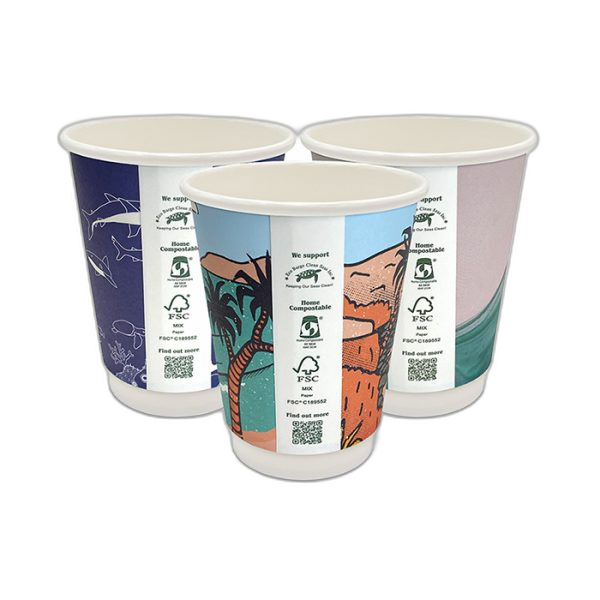
| 8oz Aqueous Coated Coffee Cups – Double Wall Art Print | 8oz, Paper + Aqueous Coated | 500 |
| 12oz Kraft Coffee Cups – Lined SW Print 90mm | 12oz, Paper + PLA Coated | 1000 |
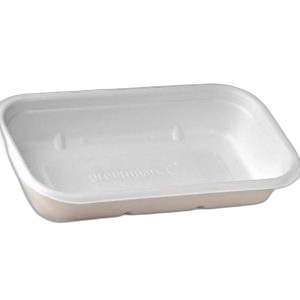
| 9x6x3 Sugarcane Takeaway Container – Unbleached Clamshell | 229x152x75mm, Sugarcane | 200 |
| 8oz PLA Takeaway Container – Coated Noodle Box | 8oz, Paper + PLA Coated | 1000 |
| 2oz Sugarcane Serving Container – Cup Unbleached | 2oz, Sugarcane | 2000 |
| 140mm Wooden Cutlery – Coffee Stirrer | 140x6x1.3mm, Wood | 10000 |
| Kraft Napkins – Quilted Lunch GT Fold | 300x300mm, Paper | 2000 |
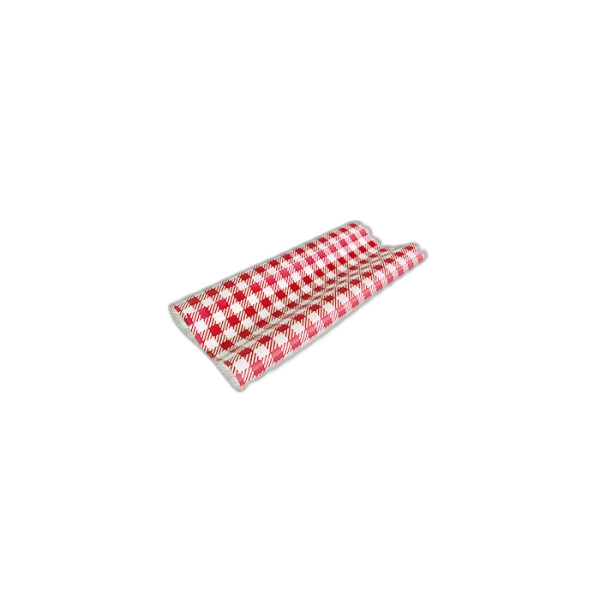
| Greaseproof Paper – Yellow Gingham | 190x300mm, Paper | 200 |
To see more container options in one place, browse the full takeaway containers range.
Which one should I buy?
Pick the items that match what you serve, then add each to your count sheet with its own reorder point.
- Cafés: 8oz Aqueous Coated Coffee Cups – Double Wall Art Print (Carton of 500) for smaller coffees and 12oz Kraft Coffee Cups – Lined SW Print 90mm (Carton of 1000) for larger ones, plus 140mm Wooden Cutlery – Coffee Stirrer (Carton of 10000) at the pick-up counter.
- Takeaway shops and food trucks: 9x6x3 Sugarcane Takeaway Container – Unbleached Clamshell (Carton of 200) for mains, Greaseproof Paper – Yellow Gingham (Carton of 200) for wrapping and lining baskets, and 2oz Sugarcane Serving Container – Cup Unbleached (Carton of 2000) for sauces and sides.
- Noodle and rice venues: 8oz PLA Takeaway Container – Coated Noodle Box (Carton of 1000) for smaller serves.
- Every venue: Kraft Napkins – Quilted Lunch GT Fold (Carton of 2000), one of the small items that tends to run out unnoticed.
If you're comparing container styles before committing shelf space, see our guides to buying takeaway containers in bulk and small takeaway containers.
Ordering from Packery
There is no minimum order, so you can top up a single item when it hits its reorder point. Delivery is a flat fee set by your postcode, and free once an order passes a set amount; checkout shows the exact cost, and today's rates are on the shipping page. Delivery takes 3–5 business days to capital cities and 4–6 business days regional. All orders are prepaid online. Damaged or faulty items are replaced or refunded free; unopened stock cartons can be returned within 7 days of delivery (10% restocking fee, return delivery at your cost). Use quick order to reorder the items on your count sheet in one go.
Setting up or restocking your packaging?
Send us your list for a trade quote, or price it yourself in the cost calculator.
No minimum order · free delivery over $750 (metro) / $1000 (regional) · damaged items replaced free · Delivery details
Related guides
Ready to order? One carton is enough — no minimum order.