
Greaseproof Paper Sheets: Storage and Reorder Planning
On this page 7 sections
- How do I track how many greaseproof sheets I use each week?
- What reorder point should I set so I never run out mid-service?
- How should I store greaseproof paper cartons?
- How do I rotate stock across different sizes and prints?
- How do the main greaseproof sheets compare?
- Which one should I buy?
- Ordering and delivery
To work out how many greaseproof paper sheets to order, count the sheets you use each week per size, then reorder when the stock on your shelf drops to what you'd use during delivery time plus a safety buffer. Store the cartons flat, dry and sealed, and use the oldest stock first so every size and print gets used before it gets dog-eared.
Key takeaways
- Track usage per size and per print, not "greaseproof" as one line. Each sheet does a different job and runs out at a different rate.
- Your reorder point is weekly usage × delivery time, plus a buffer for busy weeks. Delivery takes 3–5 business days to capital cities and 4–6 business days regional.
- Keep cartons flat, off the floor and away from the dishwasher, fryer and back door.
- Rotate first in, first out, and keep a single open carton per size on the line.
- Packery sells by the carton with no minimum order, so you can top up one size without bulking out the rest.
How do I track how many greaseproof sheets I use each week?
Count cartons, not sheets. At the start of each week, write down how many full cartons of each size you have in storage, then count again a week later. Last week's count, plus any cartons delivered in between, minus this week's count is your weekly usage in cartons.
Each product page shows the carton quantity, so you can convert to sheets if you want to check usage against how many baskets or wraps you sold. A simple sheet taped inside the storeroom door works fine. List one row per product, for example:
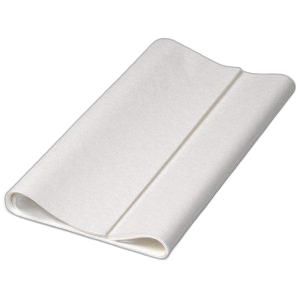
- Greaseproof Paper – White Economy 1/4 Cut (Carton of 1600) for wrapping burgers and sandwiches
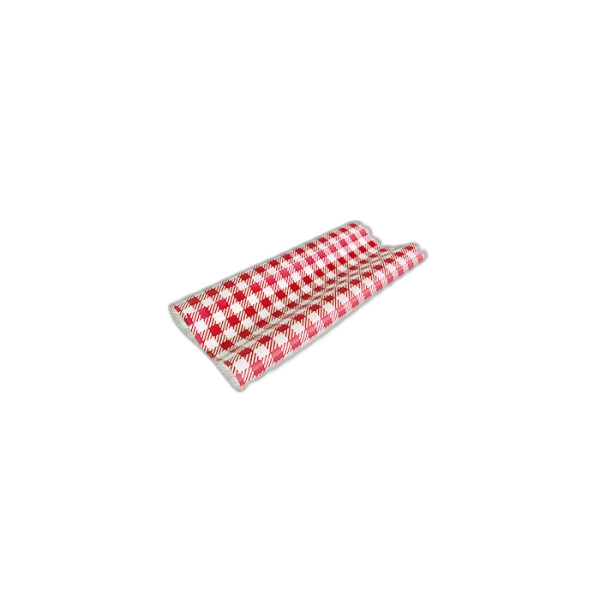
- Greaseproof Paper – Red Gingham Half (Carton of 400) for lining small baskets
- Greaseproof Paper – Newsprint Large (Carton of 200) for share platters and boards
Track for at least a few normal weeks before you set reorder points, and note any week that wasn't normal (a catering job, a public holiday, a market day). Those notes tell you how big your buffer needs to be.


What reorder point should I set so I never run out mid-service?
Set it at the stock you'd use while waiting for a delivery, plus a buffer. Take your weekly usage for that size, multiply it by your delivery time in weeks, then add the extra you went through in your busiest recent week.
Use the delivery times that apply to you: 3–5 business days to capital cities, 4–6 business days regional. Plan around the longer end of the range, and remember that the clock starts when you place the order, not when you notice the shelf is low. If your venue only does stock checks once a week, add another week's usage to the reorder point so a carton can't run out between checks.
Write the reorder point next to each product on your tracking sheet in cartons. When the count hits that number, order. It takes the guesswork out of a busy Friday.
How should I store greaseproof paper cartons?
Store them flat, dry and in their sealed carton until you need them. Paper takes on moisture and odours from its surroundings, and sheets that curl or crease are harder to lay neatly in a basket.
A few habits that help:
- Flat, not on end. Lay cartons flat on a shelf so the sheets inside don't bow.
- Off the floor. Use a shelf or pallet so mopping water and spills can't reach the base of the carton.
- Away from heat and steam. Keep stock clear of the dishwasher, combi oven, fryer and coffee machine.
- Away from the back door. Rain and humid air come in with every delivery.
- One open carton per size. Only open the next carton when the current one is empty, and keep the open one closed between services.
How do I rotate stock across different sizes and prints?
Use first in, first out: put new cartons behind or under the old ones, and always open the oldest carton first. Mark the delivery date on each carton with a marker as it comes in, so anyone on shift can see which one to open.
Prints need a bit more thought than plain sheets. If you use more than one gingham colour, or a seasonal print, decide which print is your everyday stock and which is the extra, and set reorder points only for the everyday ones. That way you won't end up with a shelf of a print you've stopped using. Check our sizes, cuts and price per sheet guide if you're still choosing your everyday sizes.
How do the main greaseproof sheets compare?
Every product below is paper and sold by the carton. The table shows what you're counting when you track usage.
| Product | Size | Colour | Carton qty |
|---|---|---|---|
| Greaseproof Paper – White Economy 1/4 Cut (Carton of 1600) | 205x330mm | White | 1600 |
| Greaseproof Paper – White Economy 1/3 Cut (Carton of 1200) | 410x220mm | White | 1200 |
| Greaseproof Paper – Yellow Gingham (Carton of 200) | 190x300mm | Yellow | 200 |
| Greaseproof Paper – Green Gingham (Carton of 200) | 190x300mm | Green | 200 |
| Greaseproof Paper – Red Gingham Half (Carton of 400) | 190x150mm | Red | 400 |
| Greaseproof Paper – Newsprint Large (Carton of 200) | 400x330mm | Newsprint | 200 |
Notice the carton quantities differ a lot between products. A size with a large carton quantity lasts longer between orders, so its reorder point in cartons will usually be lower than a size that comes in a carton of 200.
Which one should I buy?
Choose based on the job each sheet does, then set a separate reorder point for each.
- Takeaway shops and burger bars wrapping by hand: Greaseproof Paper – White Economy 1/4 Cut (Carton of 1600) at $0.01 each. It's the plain everyday wrap, so it's the one most worth tracking weekly.
- Venues wrapping larger rolls, wraps or fish and chips: Greaseproof Paper – White Economy 1/3 Cut (Carton of 1200), a 410x220mm sheet at $0.01 each.
- Cafés and diners lining baskets with a printed look: Greaseproof Paper – Yellow Gingham (Carton of 200) or Greaseproof Paper – Green Gingham (Carton of 200), both 190x300mm at $0.03 each. Pick one as your everyday print.
- Small baskets, sides and snacks: Greaseproof Paper – Red Gingham Half (Carton of 400), 190x150mm at $0.01 each.
- Share boards, platters and trays: Greaseproof Paper – Newsprint Large (Carton of 200), 400x330mm at $0.07 each.
The full range, including black, blue, green and red gingham in large and half sizes, is in food paper. If you're still weighing up greaseproof against baking paper for some jobs, read baking paper vs greaseproof.
Ordering and delivery
There's no minimum order, so you can reorder a single size when it hits its reorder point. Delivery is a flat fee set by your postcode, and free once an order passes a set amount; checkout shows the exact cost, and today's rates are on the shipping page. All orders are prepaid online. Damaged or faulty items are replaced or refunded free; unopened stock cartons can be returned within 7 days of delivery (10% restocking fee, return delivery at your cost). When your tracking sheet says it's time, use quick order to reorder your regular sizes in one go.
Setting up or restocking your packaging?
Send us your list for a trade quote, or price it yourself in the cost calculator.
No minimum order · free delivery over $750 (metro) / $1000 (regional) · damaged items replaced free · Delivery details
Related guides
Ready to order? One carton is enough — no minimum order.